Mostly not yet, and that is probably a good thing. As of November 2026, OpenAI dots cannot text other people, Claude Duet "doesn't make phone calls or send text messages to other people", and Meta Muse's ability to read your Messages on a Mac is opt-in and disputed. Self-hosted tools can auto-reply to your texts, but the safer approach is an AI that drafts replies you approve.
This article is research-based. We have not hands-on tested these products.
Which agents can reply to texts for you?
| Agent | Reads your other texts? (Nov 2026) | Replies to other people? | Notes |
|---|---|---|---|
| OpenAI dots | No | No (texting channel) | "you're the only one who can text your dot" |
| Claude Duet | No | No | Messages you only, in its app |
| Meta Muse | Mac Messages connector (opt-in, Full Disk Access) | Through connected apps, with approvals | Access dispute reported |
| Siri AI (iOS 27) | Uses personal context on device | Sends what you dictate | System assistant, not autonomous |
| Grok Bot | No evidence for SMS | X Chat and Slack only | |
| OpenClaw (self-hosted) | If you connect it | Configurable | Highest risk |
Sources: learn.chatgpt.com, Claude Help, Meta Help, OpenClaw docs.
Why the big agents hold back
OpenAI's docs are explicit: "Setting up texting doesn't give your dot or OpenAI access to your other text conversations." Dots can do proactive research, but it is read-only, and the dot cannot text third parties. Anthropic builds approval gates into Duet for messages, payments, signatures and deletions.
The caution is understandable. A text to a friend, boss or partner is high-stakes: wrong tone, wrong facts or an overshared detail can do real damage, and you cannot unsend an SMS.
What happened with Muse and Messages?
Meta Muse's Mac app offers a Messages connector that needs Full Disk Access to read your conversations. In September 2026, an Inc. columnist, Jason Aten, reported that Muse appeared to read his Messages even with access turned off. Meta denied this. Whatever the truth of that case, it shows why giving any agent access to your private messages deserves care.
Muse has had other incidents: in one reported case it shared a user's address with a Marketplace contact. getpersonalaiagents.com tracks agent incidents.
What are the risks of auto-replies?
Pros
- Saves time on routine, predictable messages
- Can keep people updated when you are busy
Cons
- Wrong facts or tone sent in your name
- Oversharing addresses, schedules or private details
- Prompt injection: a malicious text can instruct the agent
- Others may feel misled if they don't know a bot replied
Prompt injection is the big one
If an agent reads incoming messages and can act, anyone who texts you can try to give it instructions. Invariant Labs demonstrated this with a WhatsApp MCP setup, where a crafted message could make an agent leak chat history. An auto-replying agent is exactly the kind of system this attack targets. Read prompt injection via messages before connecting an agent to your inbox.
- Stranger sends crafted text
- Agent reads it as instructions
- Agent replies or forwards data
- Your information leaks
A safer setup: drafts and approvals
If you want help with replies, keep yourself in the loop:
- Ask for draftsText your agent "Draft a reply to Alex saying I'm running 15 minutes late."
- Review the wordingCheck facts, tone and anything personal.
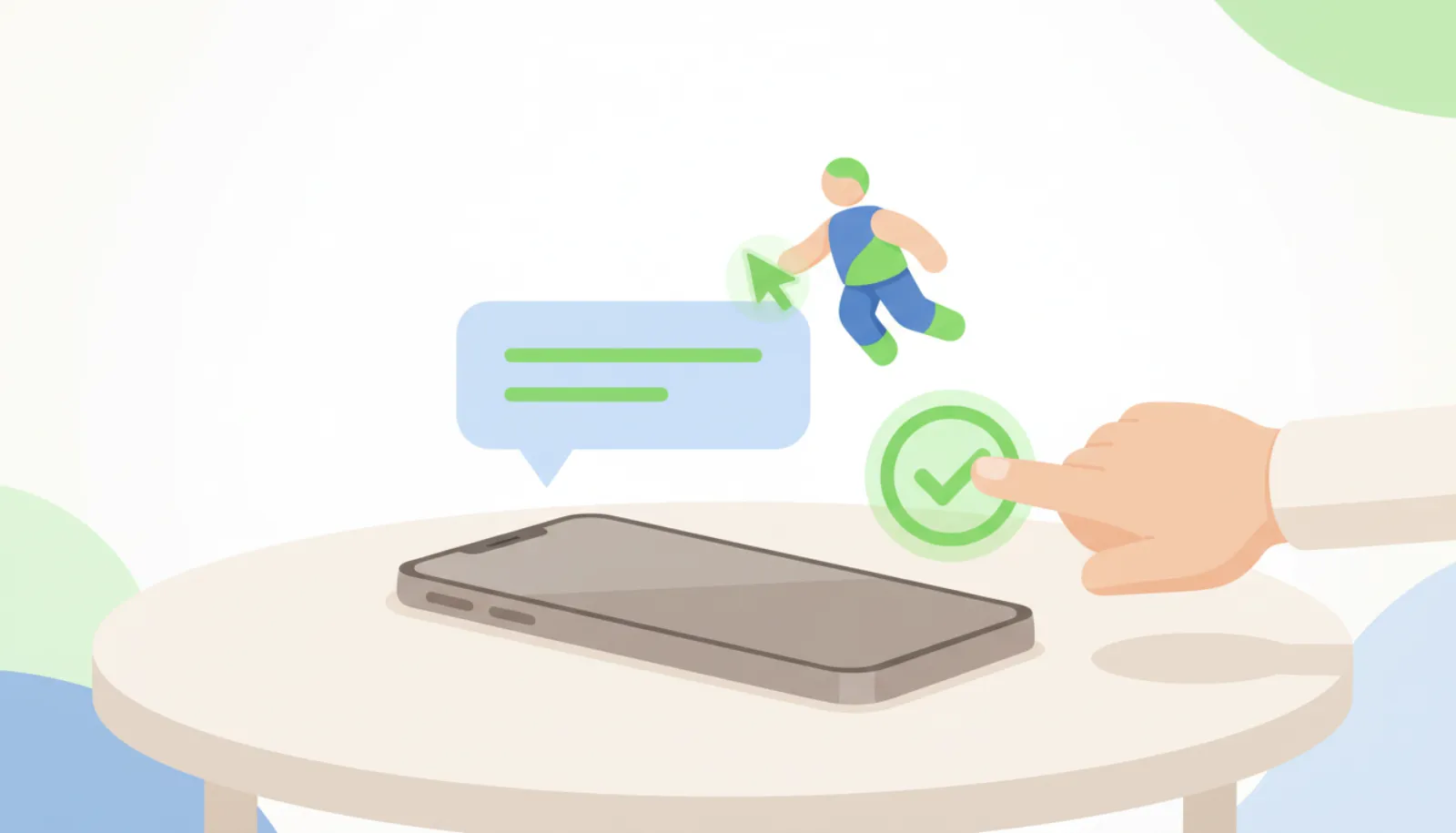
- Send it yourselfCopy the draft into the conversation, or approve it if the agent supports approvals.
- Limit accessAvoid giving agents blanket access to all your messages.
This works with any agent today, including dots, Muse and Duet. See 25 things to text your AI agent for more draft-style requests.
Is it rude, or illegal, to let AI reply?
For personal messages, there is no general law requiring disclosure, but etiquette matters. Many people would feel misled to learn a heartfelt reply came from a bot. A quick note like "drafted with AI" in group logistics chats avoids awkwardness.
Businesses are different. Automated texts to customers fall under consent rules such as the TCPA in the US and PECR in the UK. See TCPA rules for AI texting.
What about group chats?
Dots does not support group chats over text, and adding an AI to a group raises the same issues with everyone else's privacy. Our guide to adding an AI agent to a group chat covers what is possible.
What about business auto-replies?
Businesses are a different case. Using AI to answer customer texts about bookings, orders or opening hours is common and allowed on SMS and the WhatsApp Business Platform, provided consent and opt-out rules are followed. Those are customers texting a business number, not an assistant answering your personal messages. Our AI SMS customer support guide covers that use case.
Can Siri or Muse draft replies on device?
Siri AI in iOS 27 can use personal context across apps, which helps with dictated replies, but you still decide what to send. Muse's Messages connector on Mac can read conversations if you grant Full Disk Access, which lets it suggest replies with context. Weigh that convenience against giving a cloud service access to every private conversation on your computer.
What should you never let an agent send for you?
Anything you would not want to explain later: apologies, condolences, money requests, work commitments and anything involving someone else's private details. These are the messages where tone and judgement matter most, and where an AI mistake costs the most.
Bottom line
An AI can help you reply to texts, but in November 2026 the responsible way is drafts you approve, not autonomous replies. The big agents deliberately avoid texting other people, and the self-hosted tools that can do it expose you to misfires and prompt injection. For more on setting permissions, see getpersonalaiagents.com's safety and permissions guide.