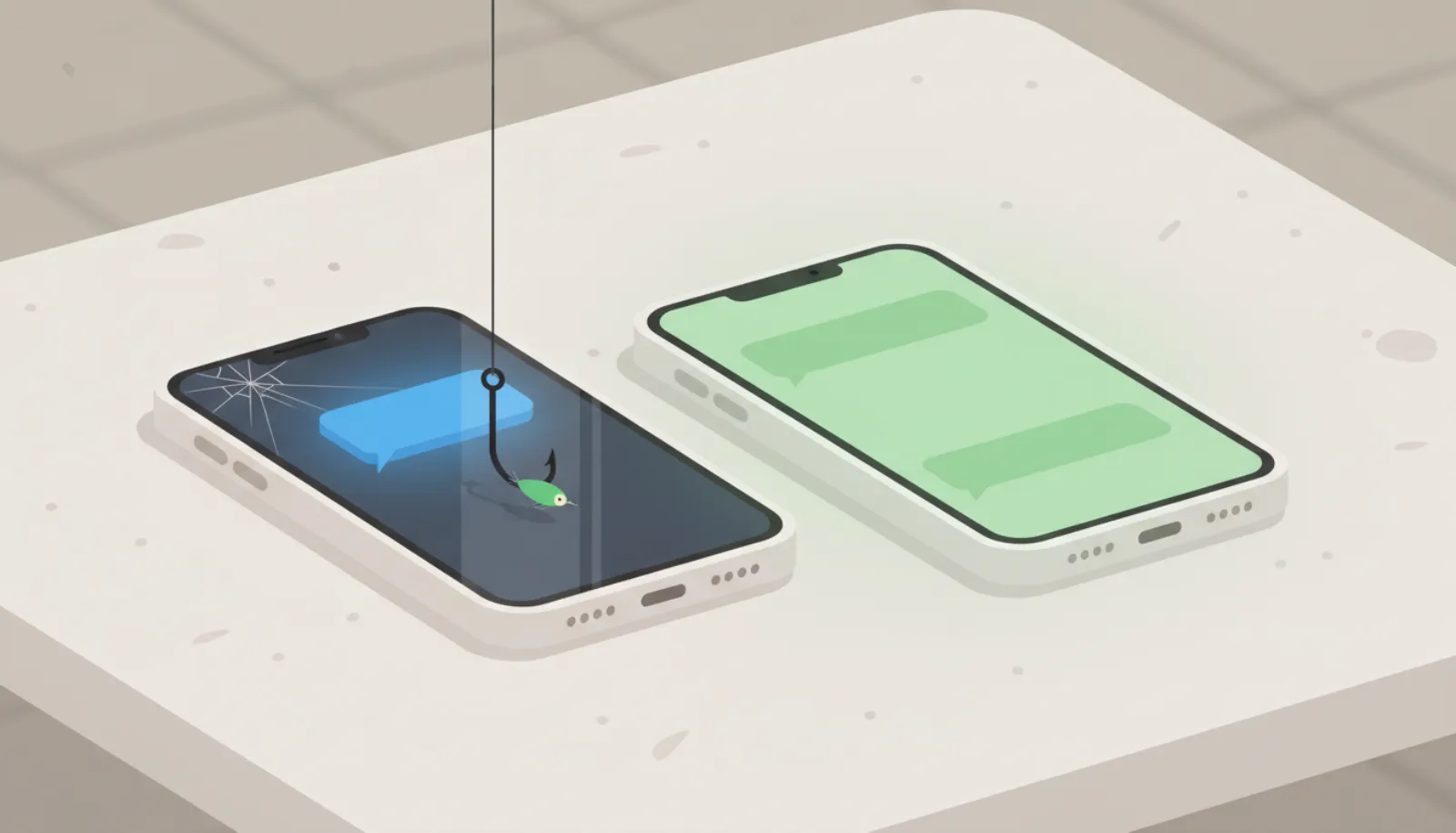
Personal AI agents that "message you first" give scammers a new script. A text saying "Hi, it's your AI assistant, I need you to confirm a payment" sounds plausible in late 2026. Real agents follow a few predictable patterns, and most fakes break them.
This guide is based on the official launch coverage for the major agents and FTC scam data.
How do real AI agents actually message you?
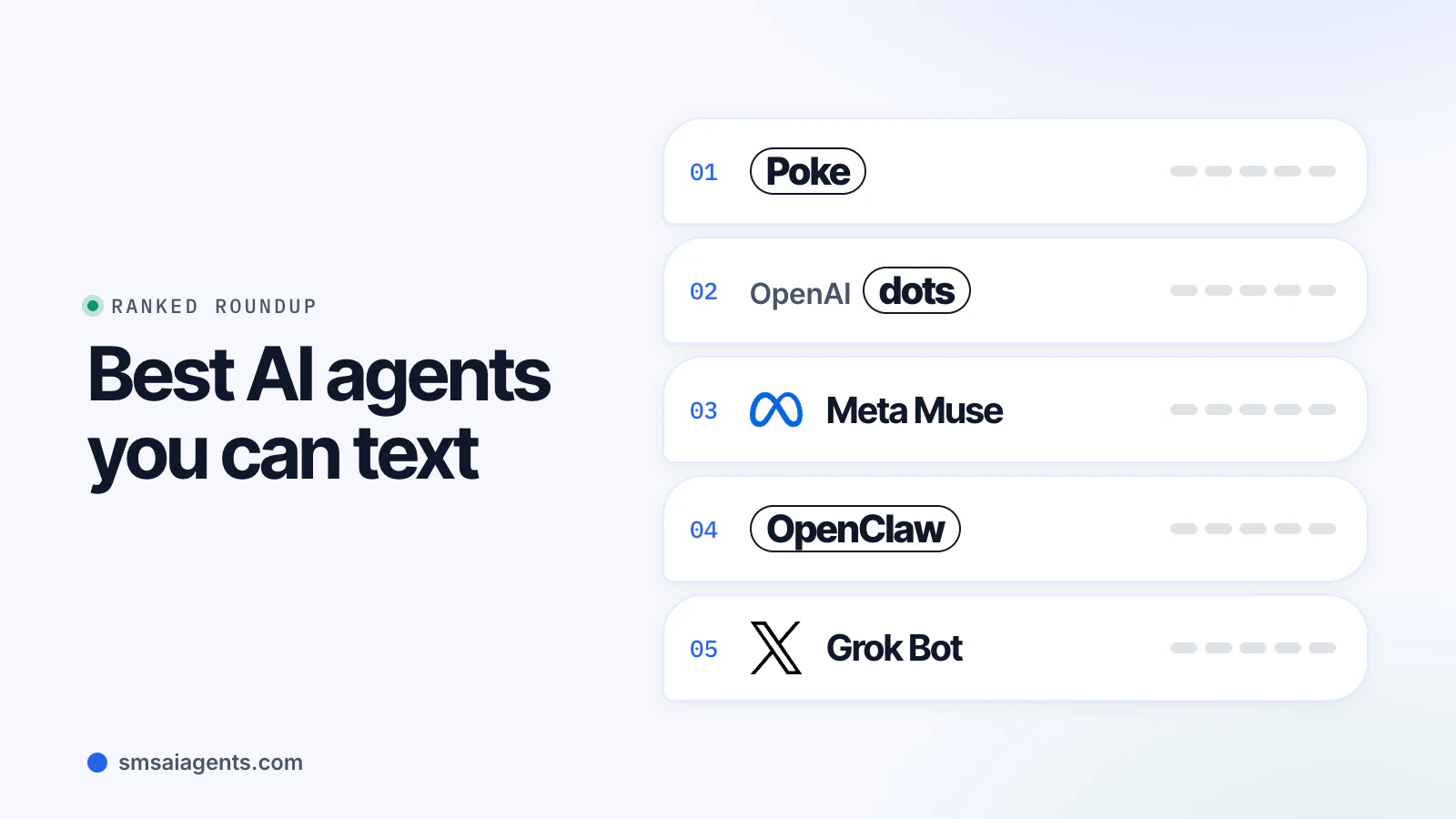
As of November 2026, none of the four big personal agents gives you an ordinary SMS phone number, based on launch coverage. They reach you inside their own app or a platform you already signed into.
| Agent | How it contacts you (Nov 2026) | Ordinary SMS from a number? |
|---|---|---|
| Meta Muse | Muse app, web, and WhatsApp for US adults | No |
| OpenAI dots | ChatGPT app, Slack, Teams; texting in beta since Oct 28, 2026 for US Pro users (iMessage, RCS) | Not generally |
| Claude Duet | Claude app on iOS, Android and web; "can't yet call or text people" | No |
| Grok Bot | Grok Bot app, X Chat, @bot on X, email | No |
Sources: PBS/AP on Muse, The Next Web on dots, VKTR on Duet. Our guide to AI agents you can text tracks changes, and the dots texting page covers OpenAI's rollout.
Text-native assistants such as Poke do use SMS and iMessage, but only after you sign up and text them first. A text-first assistant you never signed up for is not your assistant.
What are the warning signs of a fake AI agent text?
Pros
- Real: appears inside the official app or a platform you signed into
- Real: continues a task you actually started
- Real: asks you to approve actions in the app, not by replying with codes
Cons
- Fake: arrives by SMS from an unknown number or short link
- Fake: asks for a password, one-time code, card number or crypto
- Fake: creates urgency ("payment fails in 30 minutes")
- Fake: asks you to install an app or "reconnect" via a link
The FTC's top text scams of 2024 were fake package delivery problems, phony job offers, fake fraud alerts, bogus unpaid toll notices and "wrong number" texts that turn into investment scams. AI-agent impersonation fits neatly into the fraud-alert and delivery patterns: "Your agent tried to book your flight but your card was declined; tap here to update."
- Reported US losses to text scams in 2024 (FTC)
- $470M
- Increase over 2020
- 5x
- Total US fraud losses reported in 2025
- $15.9B
The 2025 total comes from the FTC's March 2026 testimony to the Joint Economic Committee, and text was the top reported contact method. The FTC notes most fraud is never reported, so real losses are higher.
How do you verify a message claiming to be from your agent?
- Do not use the textIgnore any link, number or code in the message itself.
- Open the official appGo to the agent's app or website directly, from your home screen or a bookmark.
- Look for the taskA genuine request will appear in the app's thread or approvals list.
- Check your accountsIf it mentions a payment or booking, check your bank or the merchant directly.
- Report and deleteForward the text to 7726, report it in your messaging app and to the FTC.
If you use an agent through WhatsApp (such as Muse), check that the chat is the official business account you started, not a new number with a similar name. On WhatsApp, verified businesses show a verified badge in chats and on their business profile.
Can scammers use AI to write better scam texts?
Yes, and they can also impersonate a business's genuine SMS agent. Some patterns to know:
- Polished language. Spelling mistakes are no longer a reliable tell. Judge the request, not the grammar.
- Conversational bait. A scam bot can hold a believable back-and-forth for many messages before asking for money, much like the FTC's "wrong number" pattern.
- Spoofed senders. Sender numbers and UK alphanumeric sender IDs can be faked, so a message can appear in the same thread as your bank's real texts. Our guide to SMS spoofing and AI agents explains how.
- Attacks on your own agent. If you connect an agent to your messages, a scam text may be aimed at the AI rather than at you, trying to make it forward data or take an action. See prompt injection through text messages.
What should businesses running SMS agents do?
If your business texts customers with an AI agent, you are part of the defence:
- Tell customers which number or sender ID you use and what you will never ask for.
- Never send links to log in from unexpected messages; ask customers to open your app instead.
- Register your brand under 10DLC in the US and, in the UK, consider the MEF SenderID registry.
- Make it easy to reach a human to check a message.
Our AI SMS customer support guide covers how to set this up. For broader advice on what permissions to give a personal agent, getpersonalaiagents.com has a guide to AI agent safety and permissions, and UK readers can see personalagent.uk's AI agent safety guide.
Bottom line
A real AI agent lives in its app or a platform you chose, continues tasks you started and asks for approval inside that app. An unexpected SMS from an unknown number, asking for codes, payment or a link tap, is almost certainly a scam, however well written. Verify by opening the app yourself, and report the text to 7726 and the FTC.