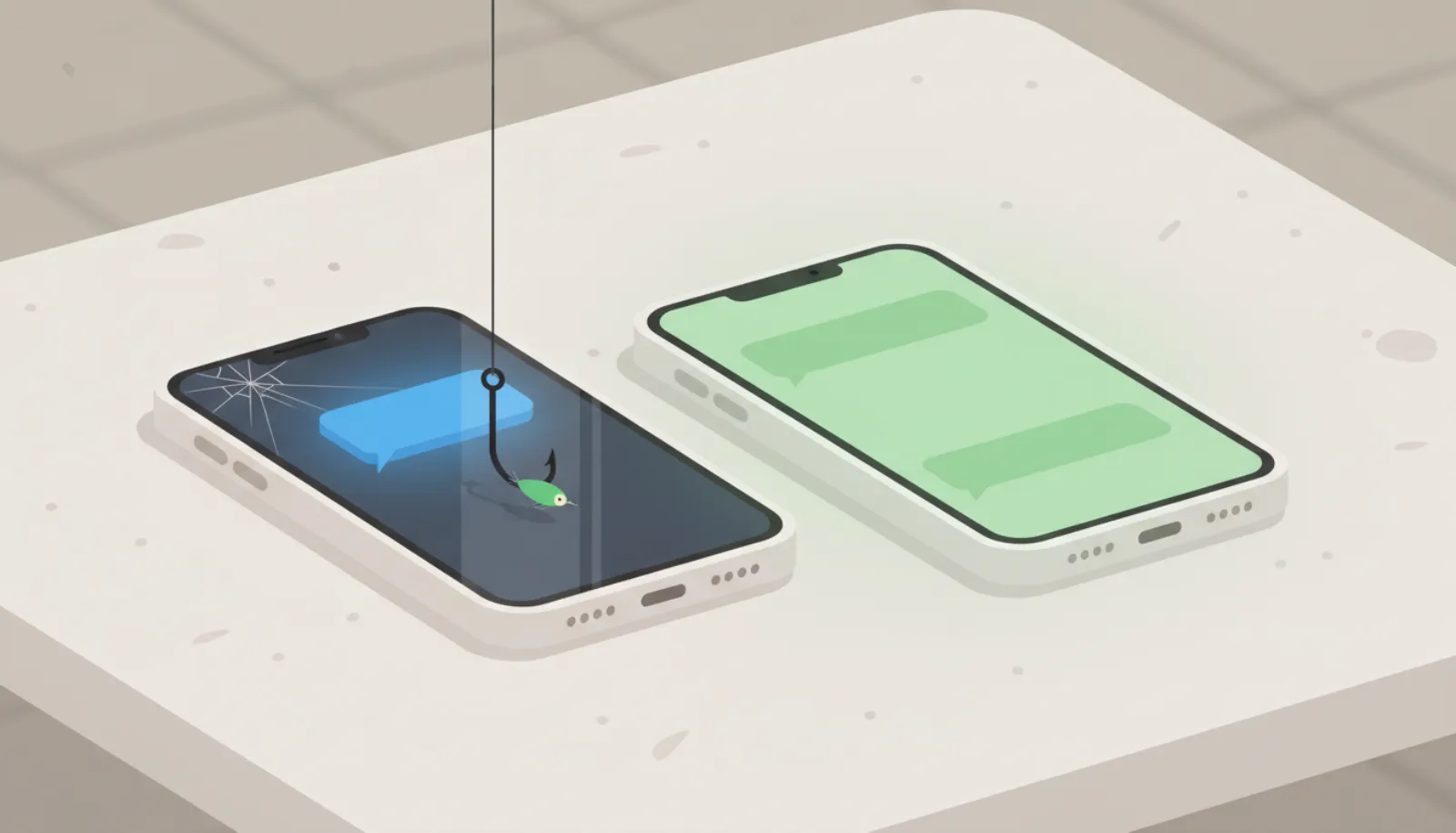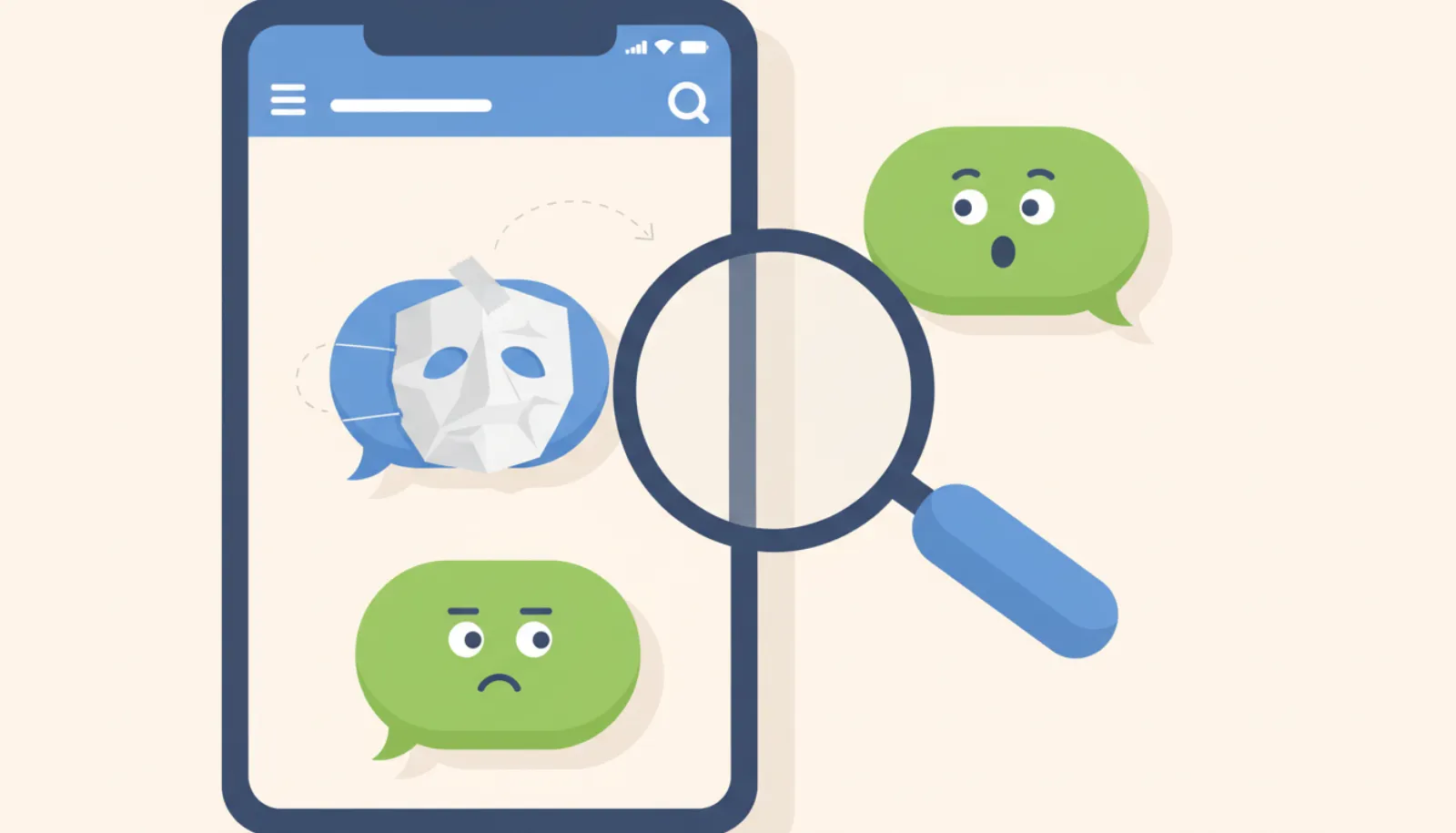
SMS was never designed with strong sender authentication. The number or name you see on a text is a claim, and on some routes it can be set to almost anything. For AI agents, that weakness cuts both ways: attackers can pretend to be your customers when talking to your agent, and pretend to be your agent when talking to your customers.
The defences below are based on Twilio's documentation, UK regulator decisions and FTC scam data.
What is SMS spoofing and how common is it?
Spoofing means making a message appear to come from a sender it did not come from. It is easiest with alphanumeric sender IDs (a brand name like "ACMEBANK" instead of a number), common in the UK and Europe, and with some international routes. US carriers have tightened controls on local numbers through 10DLC registration, but no SMS route gives you cryptographic proof of who sent a message.
The FTC's 2024 text scam spotlight shows how often impersonation drives fraud: fake delivery notices posing as the US Postal Service, fake bank fraud alerts and bogus toll notices were among the top scams, with $470 million in reported losses. In the UK, Ofcom's mid-July 2026 final statement on messaging scams declined to mandate a central Sender ID registry, as ISPreview reported, leaving protection to the voluntary MEF SenderID Protection Registry, which UK mobile networks use to block impersonators.
Risk 1: someone pretends to be your customer
Many SMS agents look up the conversation by the sender's phone number. That is fine for history, and dangerous for authorisation.
- Attacker sends text as customer's number
- Agent looks up account by number
- Agent reveals data or acts
- Real customer harmed
What can go wrong if the agent trusts the number:
- Data disclosure. "What's my balance / address / next appointment?" answered to the wrong person.
- Account changes. Cancelling an order, changing a delivery address or rebooking.
- Harassment. Making the agent send unwanted messages to the real owner of the number.
Spoofing is not the only way this happens. Phone numbers are recycled after people switch carriers or cancel service, and SIM-swap fraud lets criminals receive someone else's texts. Either way, the number tells you where to reply, not who you are talking to.
How should an SMS agent verify identity?
Match the check to the risk. Do it in code, not in the prompt.
| Request type | Example | Verification |
|---|---|---|
| Public info | Opening hours, prices | None |
| Low risk, personal | "Is my appointment still on?" (confirm yes or no only) | Number match, minimal detail |
| Account data | Address, balance, order contents | One-time sign-in link or code |
| Changes or payments | Cancel, refund, update address | Authenticated session plus explicit confirmation |
- Classify the requestYour code, not the model, decides the risk level of each tool.
- Challenge when neededSend a one-time link or code and wait for completion.
- Bind the sessionStore a short-lived verified flag on the conversation, with an expiry.
- Pass identity to toolsTools take the customer ID from your session, never from the message or the model.
- Re-verify for high riskAsk again before payments or contact-detail changes.
SMS one-time codes are better than nothing but can be phished ("read me the code we just sent") or intercepted after a SIM swap. For high-value actions, an app-based check or sign-in link that opens your authenticated site is stronger. Our SMS agent architecture guide shows where this sits.
Also verify the other direction: make sure inbound webhooks really come from your provider. Twilio signs requests with X-Twilio-Signature, and its webhook security docs recommend validating every request with the SDK. Without that check, an attacker could POST fake "inbound messages" straight to your server, with any From number they like.
Risk 2: someone pretends to be your agent
The second risk targets your customers. If your business is known for texting from an AI assistant, scammers can copy its tone and format: "Hi, this is Acme's assistant. Your appointment payment failed, tap here to update your card."
Defences for brands:
- Register. US traffic on local numbers must go through 10DLC registration, which ties messages to a vetted brand. In the UK, registering your alphanumeric sender ID with the MEF registry helps carriers block impersonators.
- Be consistent. Text from the same number or sender ID every time, and publish it on your website.
- Never ask for secrets by text. State publicly that your agent will never ask for passwords, codes or full card numbers.
- Avoid login links in unexpected messages. Ask customers to open your app or type your address instead, so a fake link stands out.
- Give an easy check. "Not sure this is us? Call the number on your card or open the app."
Customers who want to check a suspicious message can use our guide to AI text scams. UK businesses should also read our PECR guide, and personalagent.uk covers AI agent safety in the UK.
How does spoofing combine with prompt injection?
An attacker who spoofs a trusted number and sends instructions aimed at the model gets two chances: the agent may trust the sender, and the model may follow the text. If your agent gives more latitude to "admin" numbers (staff who can text commands), that privilege is a prime target. Do not grant elevated permissions by phone number; require a separate authenticated channel for admin actions. See prompt injection through text messages.
- Reported US text scam losses, 2024 (FTC)
- $470M
- Cryptographic sender proof in standard SMS
- 0
- UK Sender ID registry after Ofcom's mid-July 2026 decision
- Voluntary
Bottom line
Use the phone number to route replies and find history, never to authorise. Verify identity in code before an agent reveals data or acts, validate your provider's webhook signatures, and make your brand's real messages easy to recognise so fakes stand out.