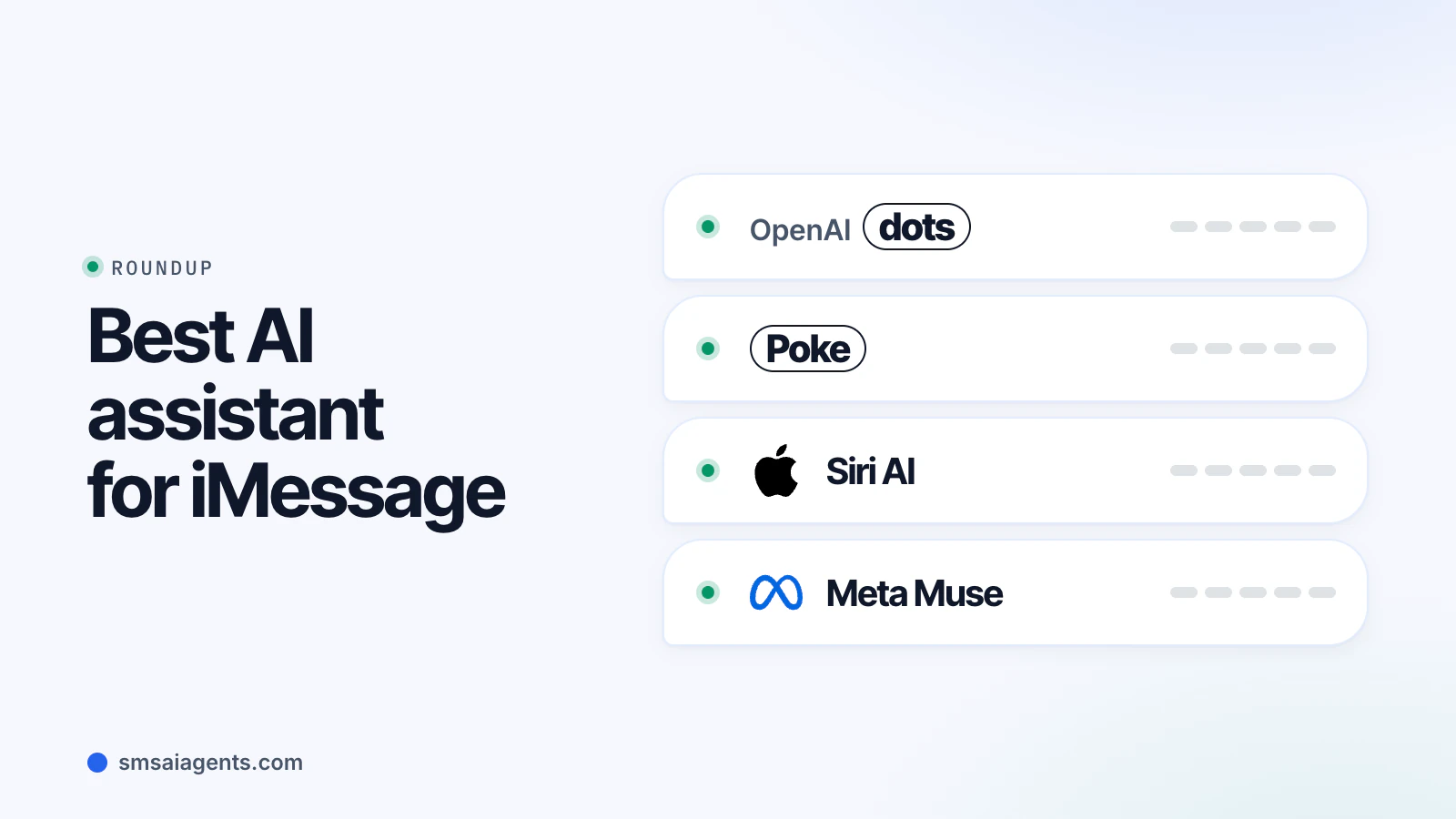
Apple Messages for Business is Apple's official way for companies to chat with customers inside the Messages app. On June 4, 2026, Poke became the first AI agent Apple approved on the platform, and Apple charges a per-user fee for it. Most other iMessage agents, including OpenAI dots, reach your Messages app through third-party messaging providers like Linq instead.
This explainer is based on public reporting. We have not hands-on tested these products.
What is Apple Messages for Business?
Apple Messages for Business lets verified companies hold conversations with customers in Messages, with features like branded profiles, list pickers, appointment slots and Apple Pay. Businesses typically connect through an approved messaging service provider, and Apple reviews brands before they go live. For years it was used for customer support by airlines, retailers and banks, often with chatbots handling routine questions.
What changed in 2026 is that Apple approved a general personal agent, not just one company's support desk.
How did Poke get approved?
Poke is a text-native personal agent from The Interaction Company of California. It went public in March 2026 on SMS, iMessage and Telegram, relayed about 100 million messages, and raised $10M at a $300M valuation. On June 4, 2026, according to TechWyse, it became the first and only AI agent approved on Apple Messages for Business, with Apple charging a per-user fee.
Weeks later, on July 23, Cognition announced it was acquiring Poke. TechCrunch reported the price as "low nine figures" and framed the deal around Poke's personality and messaging distribution.
- Poke goes public on SMS, iMessage and Telegram
- Poke raises $10M at a $300M valuation
- Poke approved on Apple Messages for Business
- Cognition announces Poke acquisition
- OpenAI dots texting beta launches via Linq
How else do AI agents reach iMessage?
There are three routes:
| Route | Example (as of November 2026) | Apple approval | Pros | Cons |
|---|---|---|---|---|
| Apple Messages for Business | Poke | Yes, per-user fee | Official, verified, business features | Approval process, Apple fee |
| Messaging API providers | OpenAI dots (via Linq), Caddy, Pally | Not as a business account | Fast to launch, also covers RCS and SMS | Depends on the provider |
| Self-hosted on a Mac | OpenClaw with imsg |
No | Full control | Needs an always-on Mac; security risk |
Linq, an iMessage, RCS and SMS API, raised a $20M Series A, and says its customers' agents reach 134,000 monthly users and more than 30 million messages a month. Its own case study on Caddy describes an assistant moving from an app to texting. OpenAI uses Linq for dots, according to gagadget.
- You in Messages
- Apple or provider relay
- Agent company servers
- AI model and connected apps
- Reply in Messages
Why does approval matter to users?
Pros
- Verified business identity makes impersonation harder
- Rich Messages features: pickers, forms, Apple Pay
- Apple has reviewed the brand before launch
Cons
- Apple's per-user fee may be passed on in pricing
- Approval does not mean Apple vouches for the agent's privacy practices
- Still not end-to-end encrypted to you; the agent reads your messages
For users, the biggest practical benefit is trust in who you are texting. Spoofed numbers and fake "assistant" texts are a real problem, as covered in SMS spoofing and AI agents. A verified business profile helps, though you should still check privacy terms. Our encryption guide explains why the agent can always read what you send.
What about RCS for Business on iPhone?
Since iOS 18.1 (October 2024), iPhones support RCS, including RCS business messaging where carriers enable it, per Twilio. That gives businesses a second branded channel on iPhone. Carrier support for RCS business messaging varies, and we could not confirm 2026 US coverage.
Is Siri part of this?
No. Siri AI in iOS 27 is Apple's own assistant and works across apps, but it is not offered as an Apple Messages for Business agent. Apple has not announced plans to let rival assistants replace Siri as the system assistant. For more, see getpersonalaiagents.com's Siri AI review.
What businesses should know
If you are a business thinking about AI in Messages, the ordinary customer-service use case is well established through messaging service providers. A general-purpose agent like Poke went through a distinct approval. Start with our SMS AI agents for business guide, which also covers SMS and WhatsApp options.
Could other agents join Apple Messages for Business?
Nothing prevents it in principle, but no second general AI agent had been announced on the platform as of November 2026. Apple's per-user fee changes the economics for agents with many free users, which may explain why most startups use messaging providers instead. If OpenAI or another large company moved dots onto Apple's platform, it would be a notable shift, but there is no reporting that this is planned.
How can you tell if you're talking to a verified business?
In Messages, a business chat shows the brand's name and logo in a business profile rather than a plain phone number or email address. If an "AI assistant" texts you from an ordinary number and asks for codes or payment details, treat it as suspicious. Starting the conversation yourself, from a link on the company's own website, is the safest habit.
What does this mean for privacy?
Approval on Apple's platform governs how a business presents itself in Messages. It does not change what the agent company does with your messages once they reach its servers. Read the agent's own privacy policy, check whether it trains on your data, and find out how to delete your history before connecting email, calendars or payments.
Bottom line
Apple Messages for Business gave Poke an official, verified seat in iMessage, and Apple is charging for it. Most other agents, including OpenAI's dots, take the provider route instead. For users, verification helps with trust, but privacy still depends on the agent company. See our list of the best AI assistants for iMessage to compare options.